
Parkinson's Disease at Home: Managing Mobility, Freezing, and Care
Parkinson's disease presents unique challenges that evolve over time. Learn how specialized in-home care, physical therapy, and daily strategies help maintain independence.
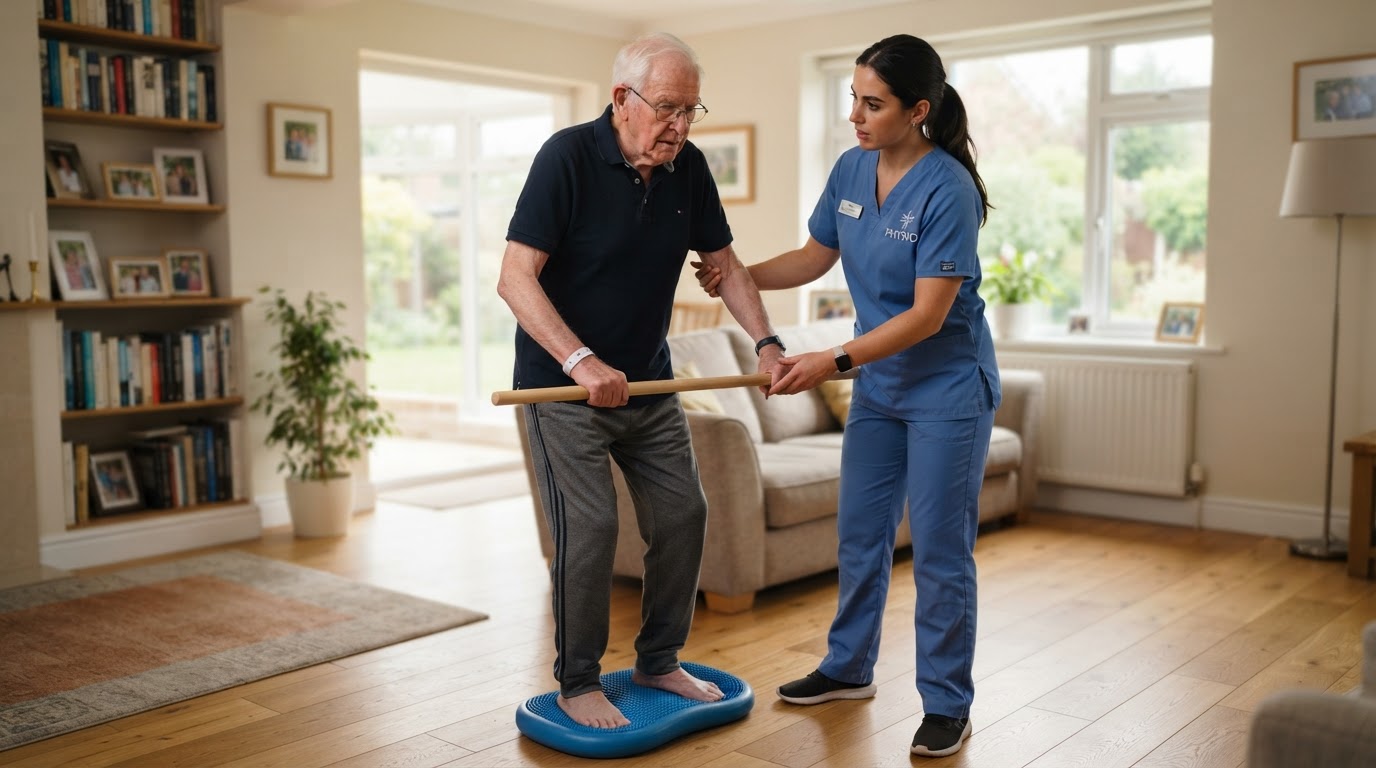
Parkinson's disease is a progressive neurological disorder that affects motor control, balance, speech, and daily functioning. Because Parkinson's symptoms fluctuate throughout the day, often swinging between 'on' periods where medications are effective and 'off' periods where stiffness and tremors return, consistency in medication timing and specialized mobility support are vital.
The critical importance of medication timing
For someone with Parkinson's taking levodopa/carbidopa, 30 minutes can mean the difference between standing smoothly or experiencing total rigidity. Prescriptions must be administered on a strict, minute-accurate schedule, often coordinated around protein intake which can interfere with medication absorption. A skilled nurse can establish a precise administration regimen and train family caregivers.
Managing gait freezing and fall prevention
Gait freezing is a common and distressing symptom where the patient's feet feel glued to the floor, often occurring when turning, approaching narrow doorways, or stepping into elevators. Certified caregivers and physical therapists use specialized sensory cueing techniques:
- Visual cueing: Stepping over high-contrast laser lines or tape strips placed on the floor.
- Auditory rhythm: Counting aloud (1-2-1-2) or playing rhythmic music to reset the brain's internal metronome.
- Weight shifting: Teaching the patient to rock gently from side to side before initiating a forward step rather than trying to push straight forward.
Speech, swallowing, and therapy programs
Evidence-based therapy protocols, such as LSVT BIG (for large motor movements) and LSVT LOUD (for voice volume and articulation), significantly improve functional ability when practiced consistently. Our speech and physical therapists work directly in the home setting, allowing patients to practice skills in the exact environment where they live.
Caring for someone with Parkinson's requires patience, specialized training, and physical stamina. Respite care gives family caregivers essential time to rest while knowing their loved one is safely supported by trained professionals.
Medically reviewed by a Blooming Beacon Registered Nurse (RN)
Last reviewed September 25, 2026. This article is for general education and is not a substitute for medical advice. For care specific to your loved one, call (253) 348-6004.
Blooming Beacon Care Team
The Blooming Beacon Care Team includes registered nurses, licensed practical nurses, and certified caregivers dedicated to helping families navigate home health care with confidence and compassion. Every article is written to be practical, honest, and grounded in the real needs of families across Pierce and South King County.