Veterans Benefits for Home Care: Aid & Attendance Explained
Veterans and surviving spouses may qualify for the VA Aid & Attendance benefit, which can help pay for in-home care. Here is how it works and who is eligible.
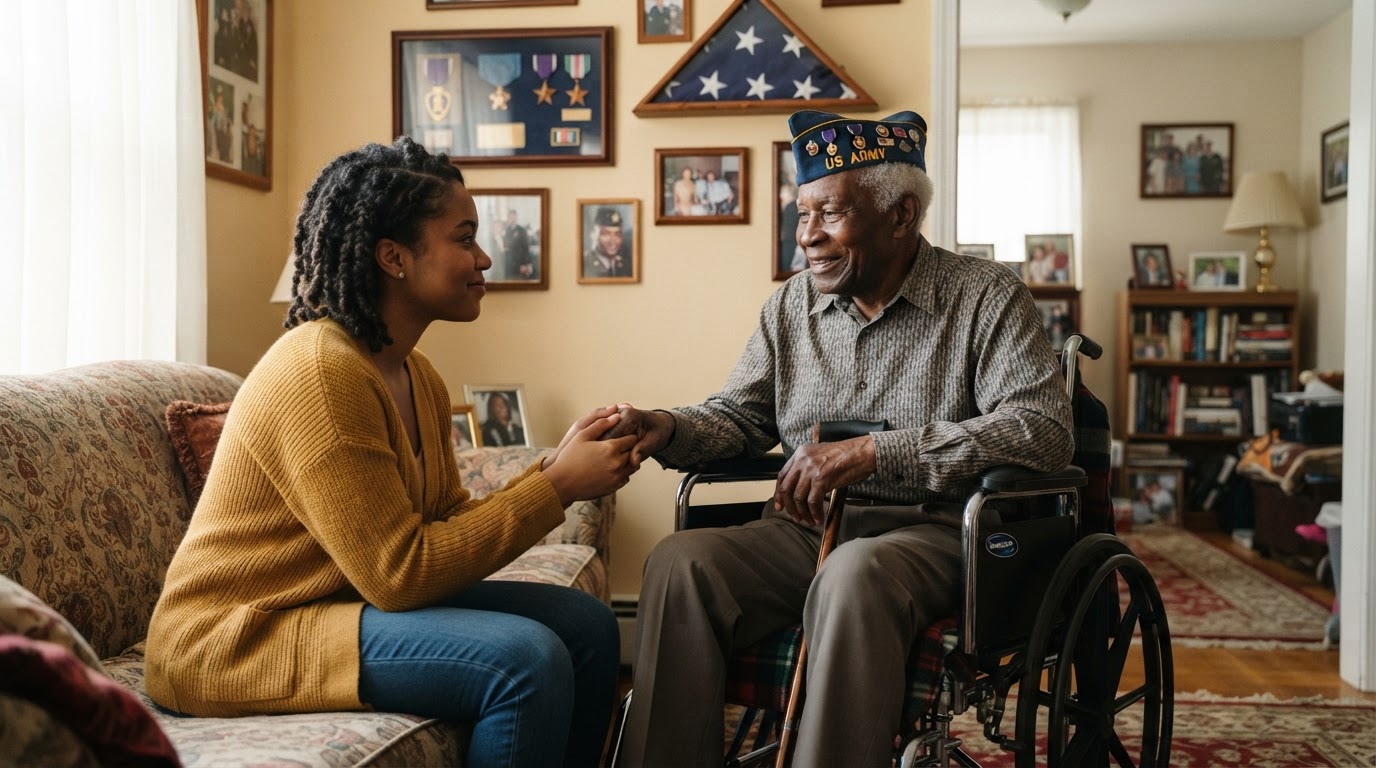
Many veterans and their surviving spouses are unaware that the Department of Veterans Affairs offers a pension benefit specifically designed to help pay for long-term care at home. The Aid & Attendance benefit is one of the most underused financial resources for home care, in part because the rules can feel intimidating. Understanding the basics can put meaningful monthly help within reach.
What is the Aid & Attendance benefit?
Aid & Attendance (A&A) is an increased monthly pension amount paid on top of the basic VA pension for veterans or surviving spouses who need help with daily living activities, are bedridden, are legally blind, or reside in a care facility. It is a tax-free benefit paid directly to the veteran or surviving spouse and can be used to pay for in-home care, adult day services, or assisted living.
You do not need a service-connected disability to qualify for Aid & Attendance. It is a needs-based pension, not a disability compensation, so many older veterans who never filed a disability claim are still eligible.
Who is eligible
Eligibility has four main parts: military service, age or disability status, financial need, and a demonstrated need for assistance with daily activities.
- Service requirement: The veteran must have served at least 90 days of active duty, with at least one day during a recognized period of war, and received a discharge other than dishonorable.
- Disability or age: The veteran (or surviving spouse) must be 65 or older, or permanently and totally disabled, or a patient in a nursing home, or receiving Social Security Disability.
- Financial need: The VA counts countable income (pension, Social Security, investment income) minus unreimbursed medical and care expenses, and there are net-worth limits that adjust annually.
- Medical need: A doctor must confirm that the person needs help with at least two activities of daily living such as bathing, dressing, eating, or mobility.
How much can it pay
The benefit amount depends on whether the recipient is a veteran or a surviving spouse and whether a spouse also depends on the veteran's pension. Current annual maximums are set by the VA and increase with cost-of-living adjustments. Many families use the benefit to cover a meaningful portion of private in-home care each month.
- A veteran with a dependent spouse can receive the highest annual amount.
- A single veteran receives a lower but still substantial amount.
- A surviving spouse receives a reduced rate, which still covers several days of care per week for many families.
How to apply
Applications are filed with the VA Pension Management Center or through a VA-accredited representative, Veterans Service Officer (VSO), or attorney. You will need the veteran's DD-214 or service records, medical evidence of the need for care, and financial documentation showing income and net worth. Approval can take several months, so starting early matters.
A warning about commercial benefit mills: Some for-profit companies charge large upfront fees to file A&A applications. Accredited VSOs provide this help free of charge. Ask a VA-accredited representative before paying anyone.
If your loved one is a veteran or surviving spouse who needs help at home, a free consultation with our team can help you understand whether Aid & Attendance may apply and how to coordinate the benefit with the care plan that fits your family.
Medically reviewed by a Blooming Beacon Registered Nurse (RN)
Last reviewed September 21, 2026. This article is for general education and is not a substitute for medical advice. For care specific to your loved one, call (253) 348-6004.
Blooming Beacon Care Team
The Blooming Beacon Care Team includes registered nurses, licensed practical nurses, and certified caregivers dedicated to helping families navigate home health care with confidence and compassion. Every article is written to be practical, honest, and grounded in the real needs of families across Pierce and South King County.