
Preventing Falls at Home: A Room-by-Room Safety Guide
Falls are the leading cause of injury among older adults. Use this room-by-room guide to make your loved one's home safer and keep them living independently longer.
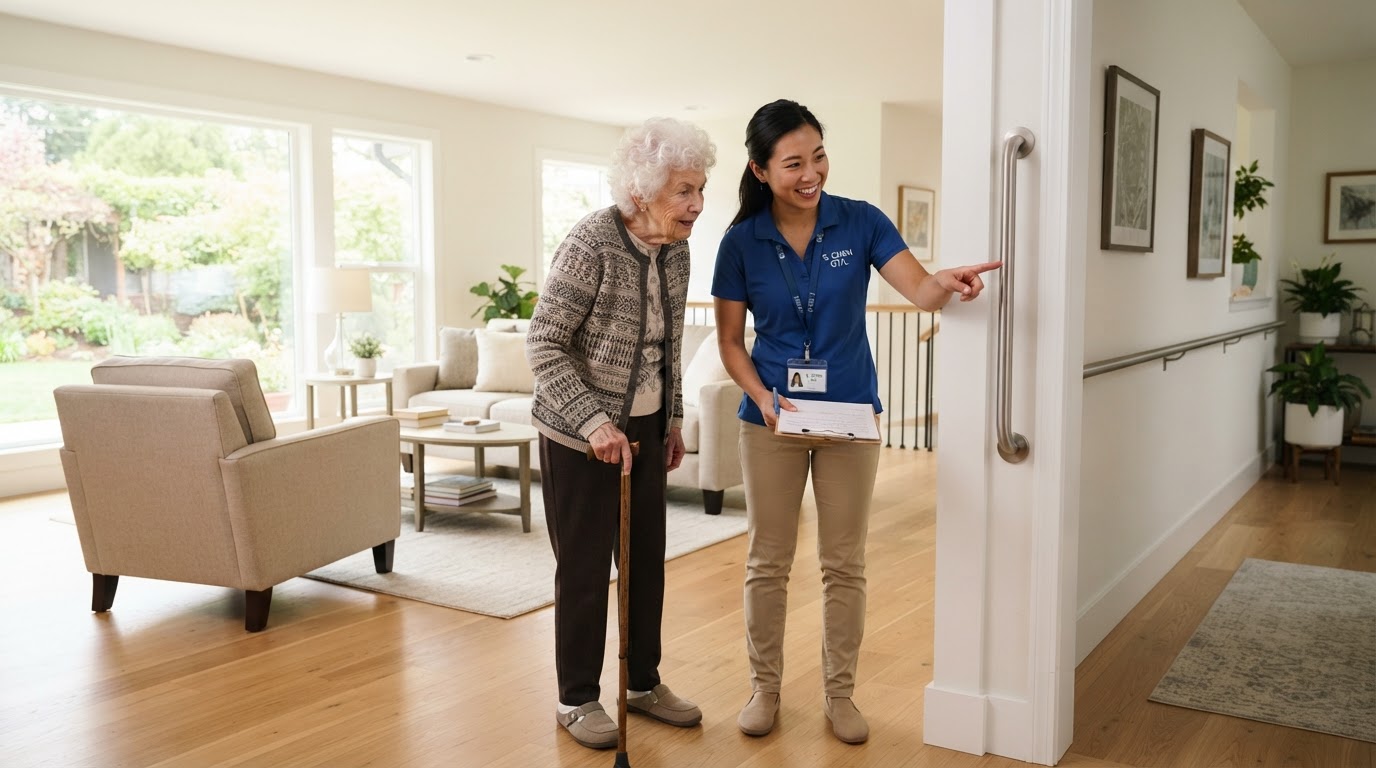
A fall can change everything. For an older adult, a single fall can lead to a hospital stay, a loss of independence, or a move to a facility. But most falls are not random accidents. They are the result of risks in the environment that can be identified and fixed. This room-by-room guide helps you see your loved one's home the way a home safety specialist does.
Why fall prevention matters
According to the CDC, one in four Americans 65 and older falls each year, and falls are the leading cause of injury and injury death among older adults. The risks rise with age, medication side effects, vision changes, and muscle loss. The encouraging news is that most fall risks are modifiable with changes that cost little and take only an afternoon.
Entryways and hallways
- Install sturdy handrails on both sides of any stairs, indoors and out.
- Ensure lighting is bright and switches are easy to reach at the top and bottom of stairs.
- Remove or secure all loose throw rugs with double-sided tape or non-slip backing.
- Keep pathways clear of shoes, cords, and clutter that can be tripped over.
The bathroom
The bathroom is the most dangerous room in the house for falls, largely because of wet, slippery surfaces. Simple modifications make a large difference.
- Install grab bars inside and outside the shower or tub, and next to the toilet. Towel racks are not grab bars and will pull out of the wall.
- Use a shower chair or bench and a handheld showerhead for seated bathing.
- Place non-slip mats inside and just outside the tub.
- Consider a raised toilet seat or safety frame for easier sitting and standing.
The bedroom
- Place a lamp within easy reach of the bed, or use a motion-activated nightlight.
- Keep a clear path from the bed to the bathroom, especially for nighttime trips.
- Ensure the bed is at a height that makes getting in and out easy without strain.
- Keep frequently used items like glasses, phone, and medications on the bedside table.
The kitchen and living spaces
- Keep everyday dishes and food within easy reach between waist and shoulder height.
- Use a sturdy step stool with a handrail for high shelves, or better, avoid climbing altogether.
- Secure area rugs or remove them, and clean up spills immediately to prevent slipping.
- Arrange furniture so there is wide, clear walking space around tables and chairs.
Lighting throughout the home
Vision changes with age make good lighting essential. Replace dim bulbs with bright, daylight-balanced ones. Add nightlights in hallways and bathrooms. Consider motion-sensor lights for outdoor paths. When in doubt, brighter is safer.
If your loved one has had a fall, a near-fall, or feels unsteady, an in-home occupational therapy assessment can identify risks specific to their home and health. Many Medicare-covered home health episodes include this assessment at no cost.
Beyond the home: strength and balance
Environmental changes address the home. Physical changes address the person. Exercise programs that build leg strength and balance, such as those recommended in a home therapy plan, reduce fall risk significantly. Your loved one's care plan should pair home modifications with a gentle, supervised activity program matched to their ability.
Medically reviewed by a Blooming Beacon Registered Nurse (RN)
Last reviewed September 19, 2026. This article is for general education and is not a substitute for medical advice. For care specific to your loved one, call (253) 348-6004.
Blooming Beacon Care Team
The Blooming Beacon Care Team includes registered nurses, licensed practical nurses, and certified caregivers dedicated to helping families navigate home health care with confidence and compassion. Every article is written to be practical, honest, and grounded in the real needs of families across Pierce and South King County.